

An afternoon slump can make a simple task feel strangely heavy. You may reread the same sentence, bounce between tabs, or keep reaching for your phone because starting the next thing feels harder than it did this morning.
You do not need to rescue the entire day. A useful afternoon reset routine should do something much smaller: interrupt the drift, reduce the noise, and help you choose one clear next action.
Why the Afternoon Slump Happens
There is no single cause of an afternoon slump. A natural dip in alertness, poor sleep, a heavy lunch, dehydration, long periods of sitting, stress, and constant task switching can all contribute. What matters for a practical reset is not diagnosing the cause in the middle of a workday. It is noticing what kind of friction you are dealing with and choosing a low-effort response.
If brain fog is persistent, severe, sudden, or interfering with daily life, treat that as a health question rather than a productivity problem and speak with a qualified healthcare professional. Cleveland Clinic also notes that “brain fog” can describe several different cognitive symptoms rather than one specific condition.
A gentle next step
If unfinished thoughts are part of the friction
Open Loop Rescue gives tasks, decisions, requests, and waiting items one private place to land so you can see what still needs you.
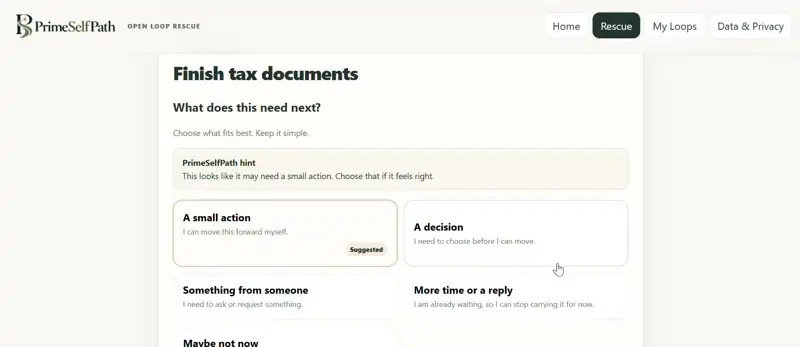
Real Open Loop Rescue screen · the tool helps turn a vague open loop into the kind of next move it actually needs.
See how Open Loop Rescue works →The 10-Minute, 3-Step Afternoon Reset
This reset is deliberately short. The goal is not to create another ritual you have to maintain. It is to make restarting easier when your attention has scattered.
Step 1: Change the Physical Pattern
Get out of the exact position in which you became stuck. Stand up, refill your water, walk to another room, look outside, or do one or two gentle stretches. A small physical change creates a clean break between the stalled part of the afternoon and what comes next.
- Stand or walk for 2–5 minutes.
- Drink some water if you have not had any recently.
- Move your shoulders, wrists, hips, or upper back if you have been sitting for a long time.
- Get natural light or look at something farther away than your screen when possible.
If sitting tension is part of the problem, use our gentle desk-stretch routine as the movement portion of this reset.
Step 2: Reduce the Inputs
When attention is already thin, more information usually makes the restart harder. Close the tabs you do not need. Silence nonessential notifications. Put your phone out of immediate reach for a few minutes. Then write down anything competing for your attention so you do not have to keep rehearsing it mentally.
Do not organize the whole list. Capture it and stop. The purpose is to clear working space, not create a second project called “fix my task system.”
Step 3: Pick One Good Move
Now ask one question: What is the smallest useful action that would make the next 20 minutes count?
Make the answer concrete. “Work on the report” is vague. “Open the report and rewrite the first paragraph” is startable. “Deal with email” is vague. “Reply to the two messages blocking someone else” is clear.
- If you feel overwhelmed, choose the smallest task that reduces uncertainty.
- If you feel scattered, choose one task and hide the rest temporarily.
- If you feel low-energy, choose a lighter useful task rather than forcing your hardest work.
- If you feel stuck, make the first action almost embarrassingly small.
Set a short work block if that helps, then begin before you redesign the plan.
What Not to Add to Your Reset
A restart loses its value when it becomes another demanding routine. You do not need a special supplement stack, an elaborate planner setup, a 45-minute meditation, or a perfect workspace before you can continue your day.
PrimeSelfPath’s approach is intentionally low-friction: remove what is competing for your attention, choose the next useful move, and restart from there. The broader system is explained in Minimalist Wellness: A Low-Friction Routine for Real Life.
One Useful Note
Get the 3-question mental load reset.
A tiny reset for deciding what needs action, what can wait, and what can leave your attention. Then get occasional practical PrimeSelfPath notes, not daily noise.
Free · useful emails only · unsubscribe anytime.
Make the Reset Easier to Repeat
Use the same three-part cue whenever the day starts slipping:
- Move: change your physical state or location for a few minutes.
- Clear: reduce tabs, notifications, and mental clutter.
- Choose: identify one good move and start it.
The exact actions can change. The sequence stays familiar. That is what makes it useful on a messy Tuesday afternoon rather than only on the days when you already feel organized.
Start Earlier When You Can
If your mornings often begin in reactive mode, the afternoon may inherit that noise. Our guide to simple morning habits before checking your phone gives you a quieter starting point without turning the morning into a major project.
Frequently Asked Questions
How long should an afternoon reset take?
Five to ten minutes is enough for this version. If the reset itself keeps expanding, it may become another form of avoidance.
Should I drink more coffee when I hit a 3 PM slump?
That depends on your caffeine use, sleep, health, and timing. Rather than treating caffeine as the automatic answer, try the low-risk reset steps first and pay attention to whether late caffeine affects your sleep.
What if the reset does not work?
Not every low-energy afternoon is a focus problem. Sometimes the useful move is to reduce the workload, eat, rest, or stop for the day when you reasonably can. If cognitive symptoms are ongoing or concerning, seek professional medical advice.
A practical next step
Need a clearer next move?
Open Loop Rescue is PrimeSelfPath’s private tool for unloading unfinished thoughts, separating what needs action from what can wait, and choosing one clear next move.
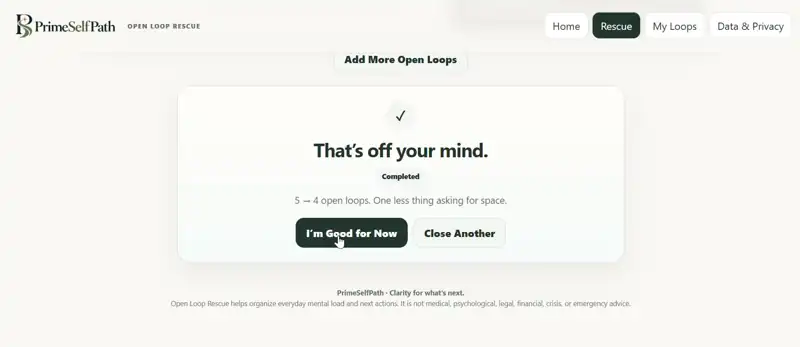
Real product screen · the goal is not a longer list. It is fewer things asking for space.
Explore Open Loop Rescue · $19One-time purchase · no subscription
PrimeSelfPath content is educational and is not medical advice, diagnosis, or treatment.
